
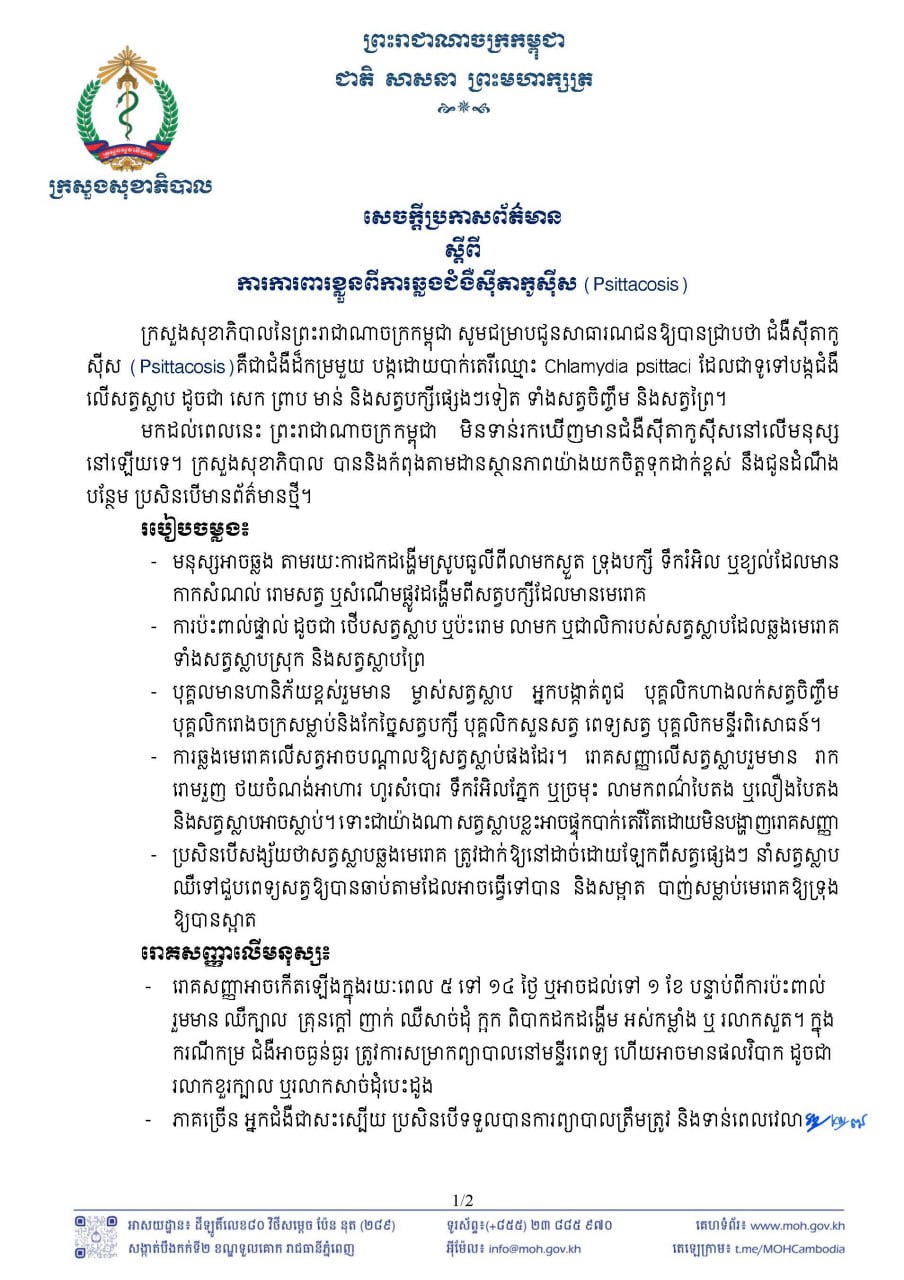
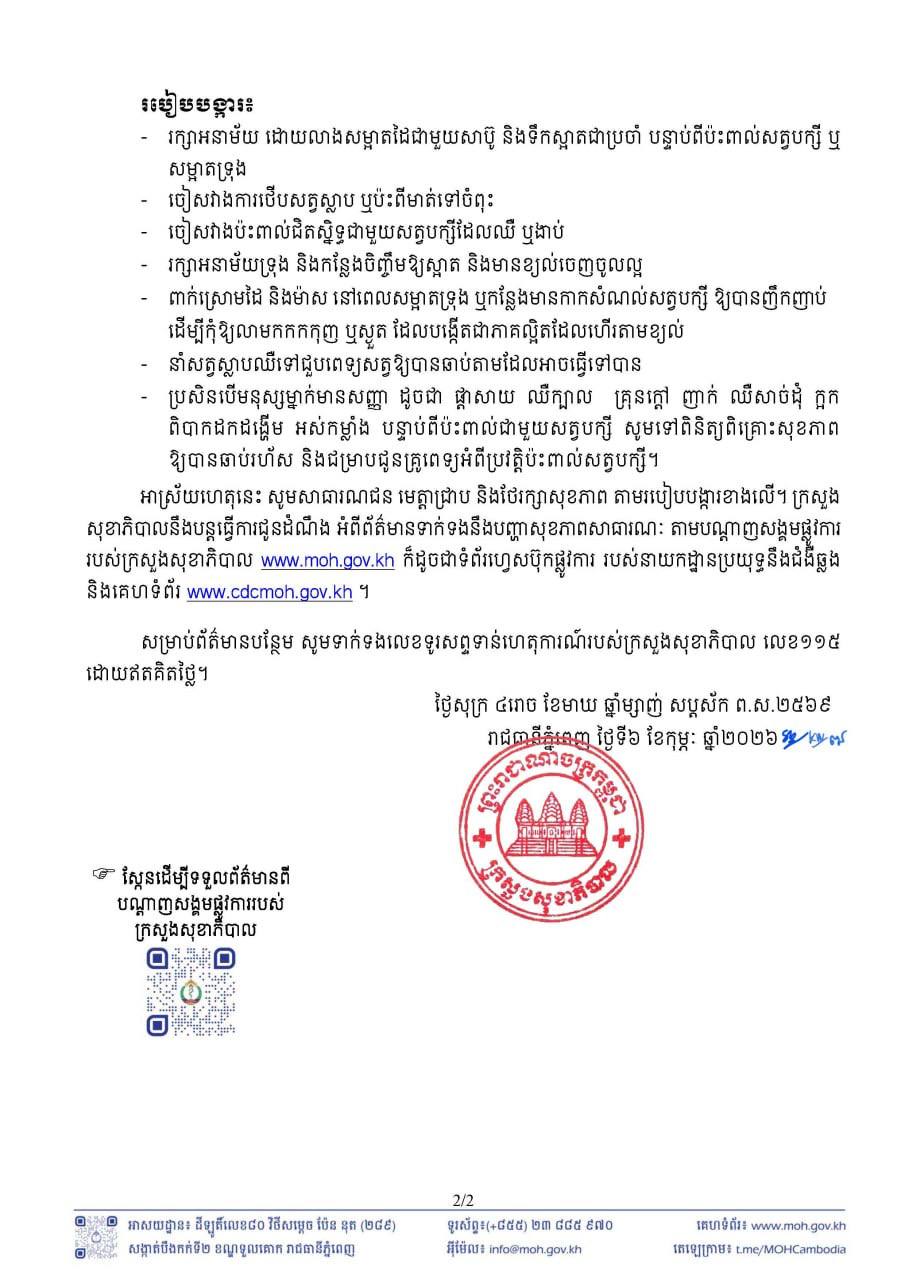
ក្រសួងសុខាភិបាលបានចេញសេចក្តីប្រកាសព័ត៌មានពីការការពារខ្លួនពីជំងឺស៊ីតាកូស៊ីស ទោះបីកម្ពុជាមិនទាន់រកឃើញករណីឆ្លងលើមនុស្សក៏ដោយ។ តាមក្រសួង ជំងឺស៊ីតាកូស៊ីសបង្កឡើងដោយបាក់តេរី Chlamydia psittaci ដែលជាទូទៅឆ្លងលើសត្វស្លាបដូចជា សេក ព្រាប មាន់ និងសត្វបក្សីផ្សេងៗ ទាំងសត្វចិញ្ចឹម និងសត្វព្រៃ ហើយអាចប៉ះពាល់ដល់មនុស្សតាមរយៈការដកដង្ហើមស្រូបធូលីពីលាមកស្ងួត ទ្រុងបក្សី ទឹករំអិល ឬកាកសំណល់ និងការប៉ះពាល់ផ្ទាល់ជាមួយសត្វឈឺ ឬរោមលាមក។ ក្រសួងបញ្ជាក់ថា មន្ត្រីបច្ចេកទេសកំពុងតាមដានស្ថានភាពយ៉ាងជិតស្និទ្ធ និងនឹងជូនដំណឹងបន្ថែម ប្រសិនបើមានព័ត៌មានថ្មី។
ក្រសួងระบุថា បុគ្គលមានហានិភ័យខ្ពស់ រួមមាន ម្ចាស់សត្វស្លាប អ្នកបង្កាត់ពូជ បុគ្គលិកហាងលក់សត្វចិញ្ចឹម បុគ្គលិករោងចក្រសម្លាប់ និងកែច្នៃសត្វបក្សី បុគ្គលិកសួនសត្វ ពេទ្យសត្វ និងបុគ្គលិកមន្ទីរពិសោធន៍។ រោគសញ្ញាលើមនុស្សអាចបង្ហាញខ្លួនក្នុងរយៈពេល ៥ ទៅ ១៤ ថ្ងៃ ឬរហូតដល់ ១ ខែ បន្ទាប់ពីប៉ះពាល់ ដោយមានគ្រុនក្តៅ ឈឺក្បាល ញាក់ ឈឺសាច់ដុំ ក្អក ពិបាកដកដង្ហើម អស់កម្លាំង និងអាចរលាកសួត។ ក្រសួងណែនាំឱ្យសាធារណជនរក្សាអនាម័យ លាងដៃបន្ទាប់ពីប៉ះសត្វបក្សី ពាក់ស្រោមដៃ និងម៉ាសនៅពេលសម្អាតទ្រុង ចៀសវាងប៉ះពាល់ជិតស្និទ្ធសត្វបក្សីឈឺ ឬងាប់ និងនាំសត្វស្លាបឈឺទៅពេទ្យសត្វឱ្យបានឆាប់។ ប្រជាពលរដ្ឋដែលមានរោគសញ្ញាបន្ទាប់ពីប៉ះពាល់សត្វបក្សី ត្រូវទៅពិនិត្យសុខភាពឆាប់រហ័ស និងប្រាប់គ្រូពេទ្យអំពីប្រវត្តិប៉ះពាល់សត្វបក្សី។
Health Ministry urges precautions against psittacosis from birds
Cambodia's Ministry of Health has issued a public notice on how to prevent psittacosis infection from birds, even though no human cases have been detected in the country so far. The ministry said psittacosis is a rare disease caused by the bacterium Chlamydia psittaci, which mainly affects birds such as parrots, pigeons, chickens and other domestic and wild birds, and can infect humans through inhaling dust from dried droppings, bird cages, mucus and respiratory secretions, or through direct contact with infected birds, feathers or droppings. Technical teams are closely monitoring the situation and will provide further updates if new information emerges.
The statement identifies high risk groups including bird owners and breeders, pet shop workers, staff at poultry slaughterhouses and processing plants, zoo workers, veterinarians and laboratory staff. Symptoms in humans can appear within 5 to 14 days, and up to one month after exposure, and may include fever, headache, chills, muscle pain, cough, shortness of breath, fatigue and pneumonia, with rare severe complications such as brain or heart muscle inflammation requiring hospital care. The ministry urges the public to maintain good hygiene by washing hands after contact with birds, avoiding kissing birds or close contact with sick or dead birds, cleaning cages regularly while wearing gloves and masks, and taking sick birds to veterinarians promptly. People who develop flu like symptoms after bird exposure are advised to seek medical care quickly and inform doctors about their contact with birds.
 0.000 SRY