
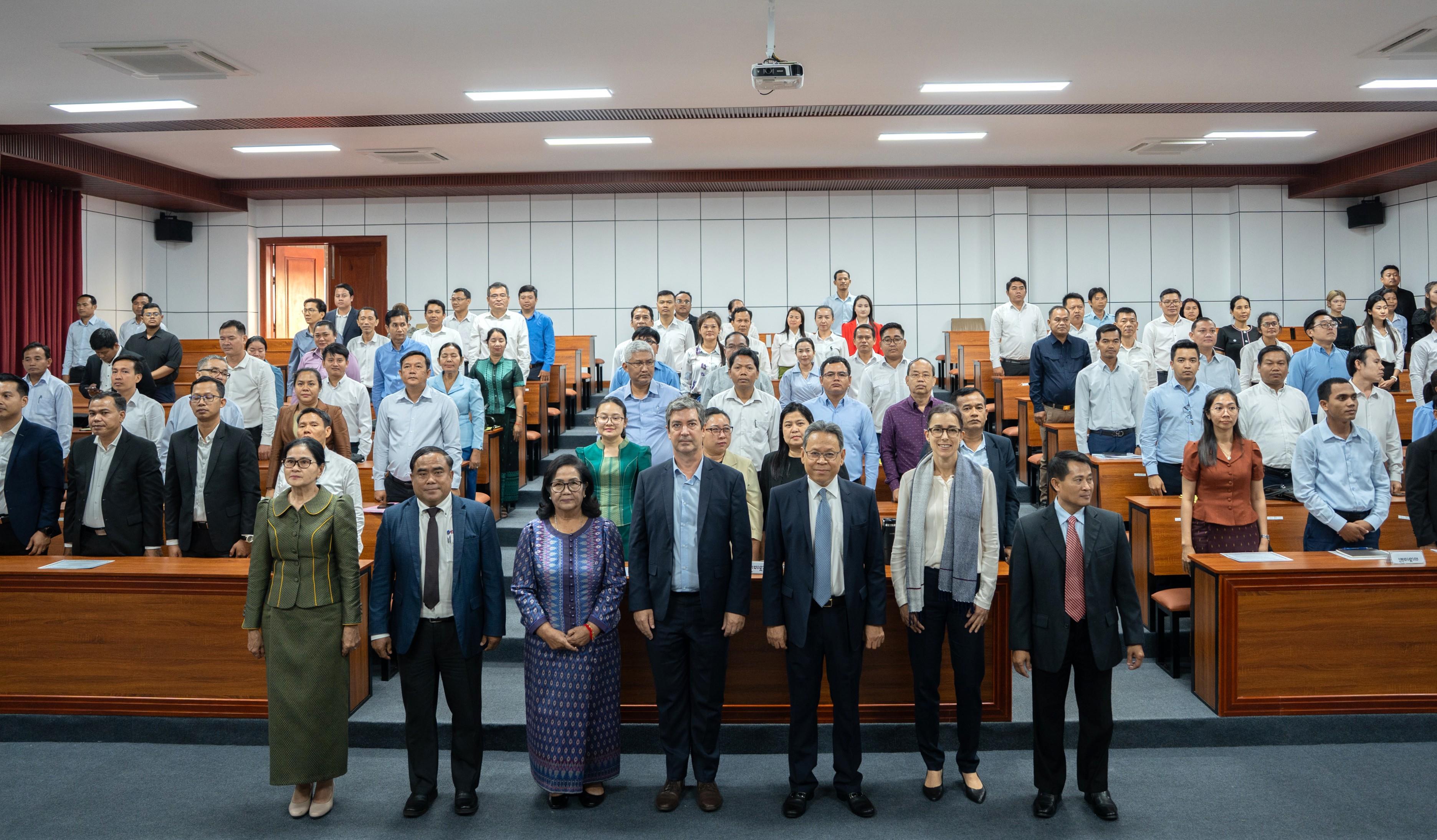
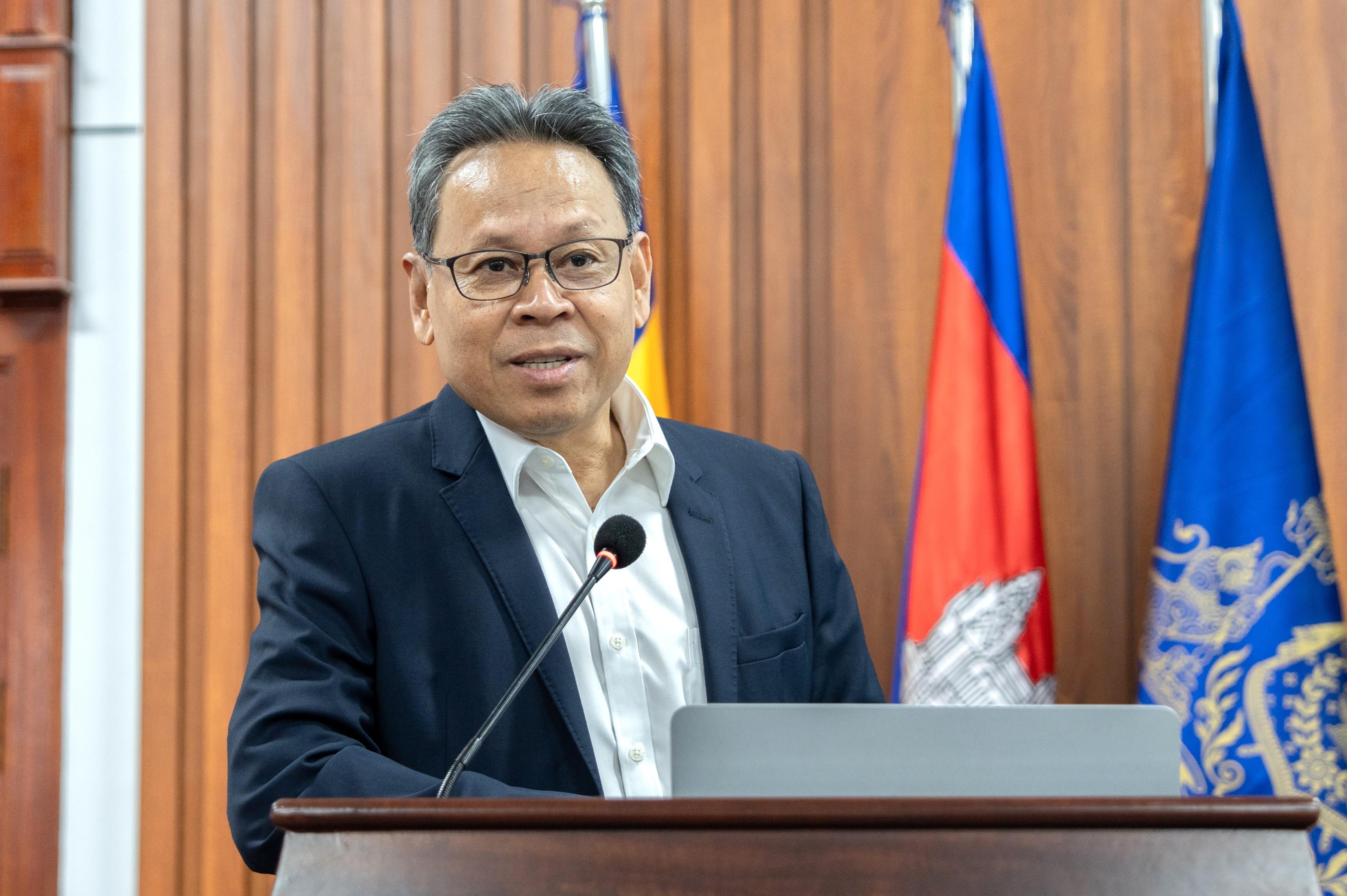
បណ្ឌិតសភាចារ្យ ហ៊ាន សាហ៊ីប រដ្ឋលេខាធិការ ក្រសួងសេដ្ឋកិច្ច និងហិរញ្ញវត្ថុ បានលើកឡើងថា ស្ថានភាពសកល និងភាពតានតឹងព្រំដែនកម្ពុជា-ថៃ កំពុងប៉ះពាល់ដល់ខ្សែច្រវាក់ផ្គត់ផ្គង់ និងពាណិជ្ជកម្ម ប៉ុន្តែជាឱកាសឱ្យកម្ពុជា ប្រែក្លាយបញ្ហាប្រឈមមកជាកាលានុវត្តភាព ដើម្បីលើកកម្ពស់ផលិតកម្មក្នុងស្រុក ជំនួសការនាំចូល។ លោកបាននិយាយនៅពិធីបិទវគ្គបណ្តុះបណ្តាលស្តីពីការគ្រប់គ្រងហិរញ្ញវត្ថុសាធារណៈតាមគោលការណ៍បៃតង និងបរិយាបន្ន ក្នុងរាជធានីភ្នំពេញ ដែលចូលរួមដោយមន្ត្រីក្រសួងសេដ្ឋកិច្ច និងហិរញ្ញវត្ថុ មន្ទីរអេហ្វខេត្ត ទីចាត់ការហិរញ្ញវត្ថុ និងនិស្សិត ប្រមាណ ២០០ នាក់។ គាត់បញ្ជាក់ថា រដ្ឋកំពុងផ្តោតលើការរក្សា និងទាក់ទាញវិនិយោគបន្ថែម កែលម្អបរិយាកាសវិនិយោគ និងពង្រឹងមូលដ្ឋានផលិតកម្មក្នុងស្រុក។
ក្នុងឱកាសដូចគ្នា បណ្ឌិតសភាចារ្យ បានណែនាំអំពីតួនាទីរដ្ឋក្នុងប្រព័ន្ធសេដ្ឋកិច្ចទីផ្សារចម្រុះ ការធានាហេដ្ឋារចនាសម្ព័ន្ធ ការប្រកួតប្រជែងយុត្តិធម៌ និងសមធម៌សង្គម ហើយរំលឹកពីប្រវត្តិសាស្ត្រចក្រភពខ្មែរដែលធ្លាប់មានអំណាចខ្លាំង។ លោកបានជម្រាបថា នៅឆ្នាំ ២០២៤ រដ្ឋាភិបាលបានអនុម័តផែនការយុទ្ធសាស្ត្រឆ្លើយតបទៅនឹងការប្រែប្រួលអាកាសធាតុ ២០២៤-២០២៣៣ ដើម្បីកាត់បន្ថយឧស្ម័នផ្ទះកញ្ចក់ និងលើកកម្ពស់អភិបាលកិច្ចបរិស្ថាន។ ក្រសួងសេដ្ឋកិច្ច និងហិរញ្ញវត្ថុកំពុងពង្រឹងសមត្ថភាពមន្ត្រីហិរញ្ញវត្ថុសាធារណៈ តាមគោលការណ៍បៃតង ជាមួយដៃគូអភិវឌ្ឍន៍ដូចជា UNITAR/PAGE និងសហភាពអឺរ៉ុប ដោយលើកទឹកចិត្តឱ្យសិក្ខាកាមយកចំណេះដឹងទៅអនុវត្តជាក់ស្តែង និងចែករំលែកនៅកន្លែងធ្វើការ។
Cambodia links local production push with green public finance and climate strategy
Dr Hean Sahib, Secretary of State at the Ministry of Economy and Finance, said current global uncertainty and tensions along the Cambodia-Thailand border are disrupting supply chains and trade but also create an opportunity for Cambodia to double efforts to strengthen domestic production and reduce import dependence. Speaking in Phnom Penh at the closing of a training series on green and climate-responsive public financial management, he stressed that the government is focusing on retaining existing investors, attracting new investment and expanding national ownership of production bases by improving the investment climate. Around 200 officials and students from economic and finance institutions across 25 provinces and the capital joined the course, organised with UNITAR under the UN PAGE programme.
Dr Sahib outlined the role of the state in a mixed market economy, including providing essential infrastructure, ensuring fair competition, improving public services and promoting social equity, while recalling Cambodia's historical strength during the Khmer Empire. He highlighted that in 2024 the Royal Government adopted the Cambodia climate change response strategy 2024-2033, aimed at cutting greenhouse gas emissions, boosting climate adaptation and strengthening environmental governance. The Ministry of Economy and Finance is using green principles to reform public financial management and build the capacity of public finance officials, with long-term support from UNITAR and the European Union. He urged trainees to apply and share the knowledge gained to enhance the effectiveness and productivity of their work in support of green economic development.

 0.000 SRY